
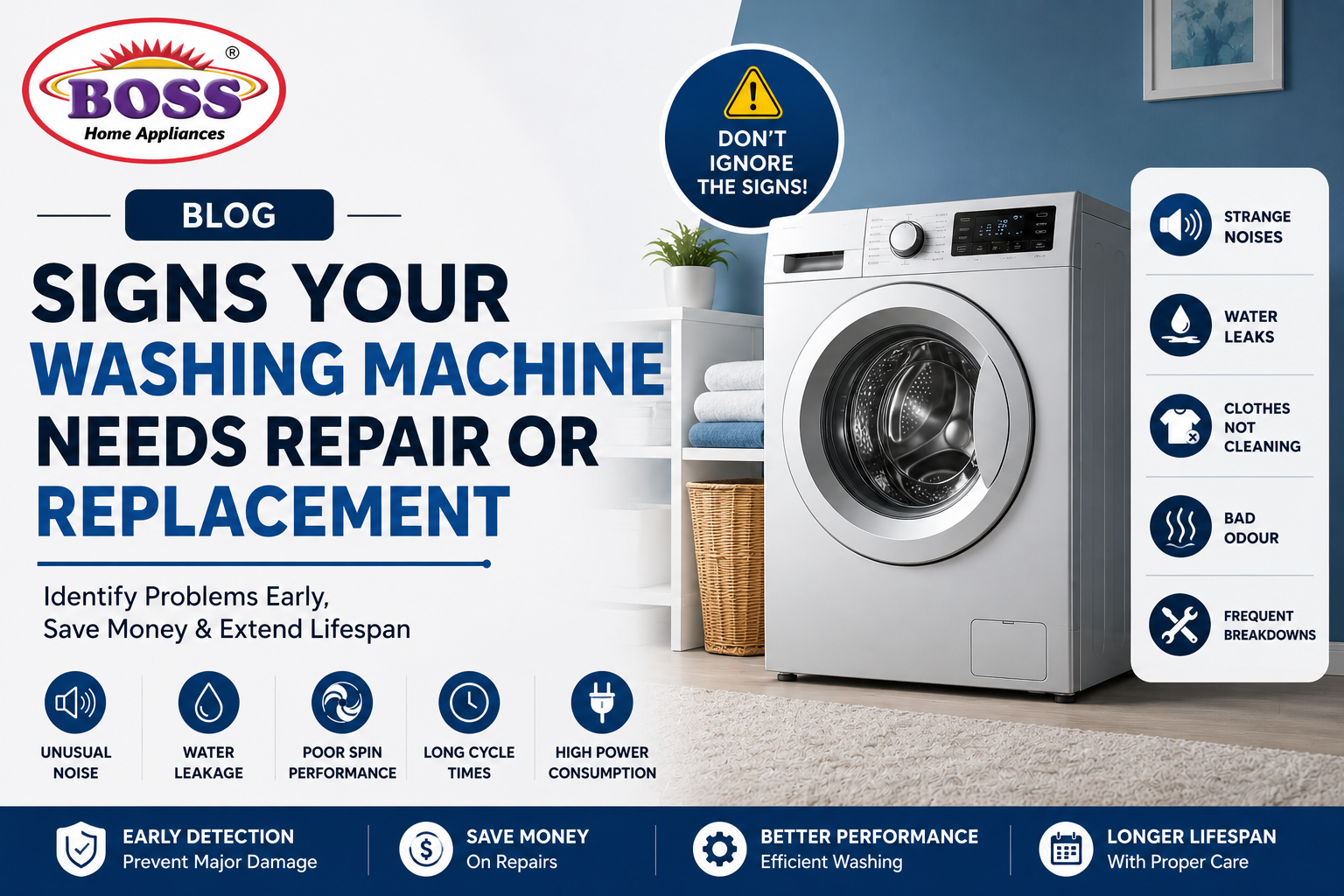
A washing machine is one of the most important appliances in any home. It saves time, reduces manual effort, and makes laundry much easier. However, like every household appliance, washing machines can develop problems over time.
Many people ignore early warning signs until the machine completely stops working. Understanding the common washing machine repair signs can help you avoid expensive repairs and unexpected breakdowns.
In this guide, we will discuss the most common signs that indicate your washing machine may need repair or replacement, along with helpful maintenance tips to extend its lifespan.
Why It Is Important to Identify Washing Machine Problems Early
Ignoring minor issues can turn small repairs into major expenses.
Here’s why identifying washing machine problems early is important:
1. Prevents Major Damage
Small faults can quickly become serious mechanical issues if ignored.
2. Saves Money
Timely repairs are often cheaper than complete replacements.
3. Improves Performance
A properly functioning washing machine cleans clothes more effectively.
4. Reduces Electricity and Water Waste
Damaged machines often consume more electricity and water.
Common Washing Machine Repair Signs
Let’s explore the most important warning signs to watch for.
1. Excessive Noise During Operation
A washing machine should operate smoothly with minimal noise. If you hear unusual sounds, it may indicate internal problems.
Common Noises Include:
- Grinding sounds
- Loud banging
- Screeching noises
- Vibrations
Possible Causes:
- Worn bearings
- Loose drum
- Motor problems
- Unbalanced loads
Excessive noise is one of the most common washing machine repair signs and should never be ignored.
2. Water Leakage Around the Machine
Water leaking from your washing machine is another serious issue.
Common Causes:
- Damaged hoses
- Loose connections
- Cracked drum
- Faulty door seal
Leaks can damage floors and nearby furniture if not repaired quickly.
3. Washing Machine Does Not Spin Properly
If clothes come out soaking wet, your machine may have spinning problems.
Possible Reasons:
- Faulty motor
- Broken belt
- Drainage issues
- Drum malfunction
Poor spinning performance affects washing quality and drying time.
4. Machine Takes Too Long to Complete a Cycle
Modern machines are designed for efficient operation. If cycles suddenly become longer, there may be an internal issue.
Common Reasons:
- Sensor problems
- Drainage blockage
- Water inlet issues
This is one of the early washing machine repair signs that many homeowners overlook.
5. Strange Burning Smell
A burning smell coming from the machine can indicate electrical or motor problems.
Possible Causes:
- Overheating motor
- Damaged wiring
- Belt friction
If you notice a burning smell, stop using the machine immediately.
6. Washing Machine Shakes Excessively
Some vibration is normal, but excessive shaking is not.
Possible Causes:
- Uneven flooring
- Drum imbalance
- Suspension damage
Constant shaking can damage internal components over time.
7. Clothes Are Not Getting Clean
One of the biggest signs of trouble is poor washing performance.
Reasons May Include:
- Weak motor
- Clogged filters
- Drum issues
- Water flow problems
When cleaning performance drops, it may indicate deeper mechanical problems.
8. Water Does Not Drain Properly
Drainage issues are among the most common washing machine problems.
Symptoms:
- Water remaining in drum
- Slow drainage
- Bad odours
Possible Causes:
- Blocked drain hose
- Faulty pump
- Filter blockage
9. Door Does Not Lock or Open Correctly
Front-load washing machines especially rely on proper door locking mechanisms.
Possible Problems:
- Faulty lock switch
- Damaged latch
- Electrical issue
A malfunctioning door can prevent the machine from operating safely.
10. Rising Electricity or Water Bills
An old or damaged washing machine may consume more resources than normal.
Signs Include:
- Higher electricity bills
- Increased water usage
- Reduced efficiency
This often indicates it may be time to consider replacement.
When to Repair a Washing Machine
Not every issue means you need a new machine.
Repair may be the better option if:
- The machine is relatively new
- Repair costs are low
- The problem is minor
- The machine still performs efficiently
Timely servicing can solve many common problems.
When to Replace a Washing Machine
Sometimes replacement is more practical than repair.
You should consider replacement if:
- Repair costs are too high
- The machine breaks down frequently
- Energy efficiency is poor
- The machine is over 8–10 years old
Understanding when to replace washing machine helps avoid unnecessary repair expenses.
How Long Does a Washing Machine Last?
The average lifespan depends on usage and maintenance.
Typical Lifespan:
- Standard machines: 8–12 years
- High-quality models: Longer lifespan with proper care
Regular maintenance significantly increases durability.
Tips to Extend Washing Machine Lifespan
Following simple maintenance practices can reduce future problems.
Clean the Drum Regularly
Dirt and detergent buildup can affect performance.
Avoid Overloading
Excess weight damages the motor and drum.
Check Hoses Frequently
Inspect hoses for leaks or cracks.
Use Correct Detergent
Using too much detergent can cause buildup and damage.
Keep Machine Level
An uneven machine increases vibration and wear.
Common Mistakes That Damage Washing Machines
Avoid these habits to prevent repairs.
Overloading Clothes
Heavy loads strain internal parts.
Ignoring Minor Problems
Small issues often become expensive repairs later.
Using Too Much Detergent
Excess detergent can clog internal systems.
Skipping Maintenance
Regular cleaning improves efficiency and lifespan.
Benefits of Timely Repairs
Addressing washing machine repair signs early offers several advantages.
Better Washing Performance
Repairs restore cleaning quality.
Lower Utility Bills
Efficient machines use less electricity and water.
Reduced Risk of Major Breakdown
Minor repairs prevent larger failures.
Longer Appliance Lifespan
Proper care helps machines last longer.
Importance of Choosing a Reliable Washing Machine
A quality washing machine offers better durability and efficiency. For example, a Boss Washing Machine can provide reliable performance when maintained properly and used according to recommended guidelines.
Investing in a dependable appliance helps reduce long-term repair issues.
Frequently Asked Questions (FAQs)
What are common washing machine repair signs?
Common washing machine repair signs include unusual noise, water leakage, spinning problems, shaking, and poor washing performance.
When should I replace my washing machine?
You should replace your machine if repair costs are high, efficiency drops significantly, or the machine is over 10 years old.
Why is my washing machine making loud noises?
Loud noises may result from worn bearings, loose drums, or motor issues.
Is it better to repair or replace a washing machine?
If repairs are affordable and the machine is relatively new, repair is usually better. Older machines may require replacement.
How can I make my washing machine last longer?
Regular cleaning, proper loading, routine maintenance, and correct detergent usage can extend lifespan.
Final Thoughts
Understanding the early washing machine repair signs can help you avoid sudden breakdowns, expensive repairs, and unnecessary stress.
Whether it is excessive noise, water leakage, poor spinning, or rising electricity bills, identifying these problems early allows you to take action before the damage becomes serious.
Regular maintenance, proper usage, and timely repairs are the keys to keeping your washing machine running efficiently for years.
If your machine frequently develops issues or becomes inefficient, it may be time to consider a replacement for better performance and energy savings.