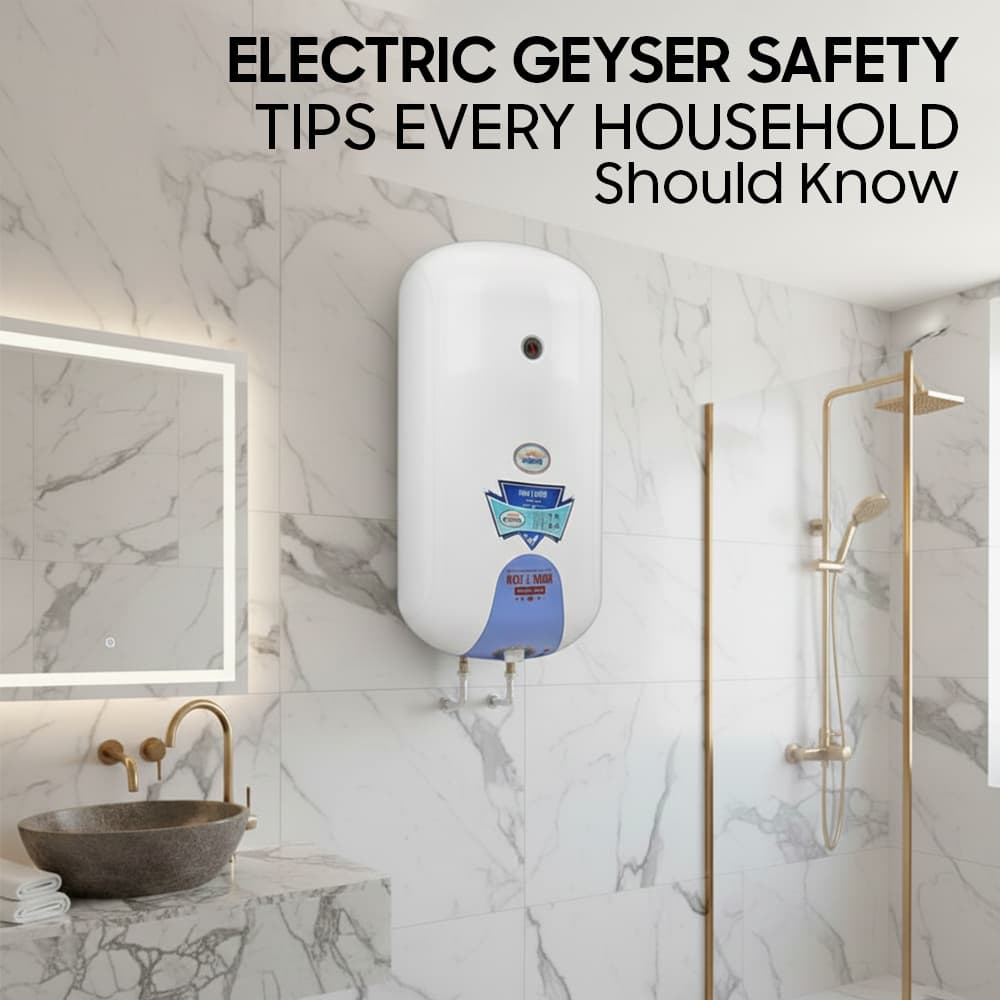
Hot water makes daily life comfortable, especially during winter. However, safety is often overlooked when using water-heating appliances at home. Many accidents happen not because of faulty products, but due to improper usage and lack of awareness.
That’s why understanding electric geyser safety tips is essential for every household. From installation to daily use, following basic precautions can protect your family, your home, and your appliance from unnecessary risks.
This guide explains the most important electric geyser safety tips every household should know, using simple language and practical advice you can apply immediately.
Why Electric Geyser Safety Matters at Home
An electric geyser works by combining electric power and water, which makes safety extremely important. Even a small mistake such as faulty wiring or overheating can lead to electric shocks, water damage, or fire hazards.
Following proper electric geyser safety tips helps households:
- Prevent electrical accidents
- Reduce the risk of burns
- Avoid costly repairs
- Extend appliance lifespan
Safety is not optional it’s essential.
1. Proper Installation Is the First Safety Step
One of the most overlooked geyser safety precautions is professional installation.
Why Proper Installation Matters
- Correct electrical wiring
- Secure wall mounting
- Proper inlet and outlet connections
A poorly installed geyser increases the risk of short circuits and water leakage. Always ensure installation is done by a trained technician following manufacturer guidelines.
2. Never Ignore Earthing and Circuit Protection
Earthing is the backbone of electric geyser safety. Without it, excess current can pass through the body or walls.
Essential Electrical Safety Measures
- Proper earthing connection
- MCB or RCCB installation
- Dedicated power socket
These measures immediately cut off electricity during faults, making them crucial electric geyser safety tips for every home.
3. Maintain a Safe Temperature Setting
Keeping the temperature too high may seem convenient, but it’s dangerous.
Recommended Temperature Range
- Ideal setting: 50–60°C
- Prevents scalding injuries
- Reduces pressure buildup
Maintaining a moderate temperature is one of the simplest yet most effective geyser safety tips for home use.
4. Switch Off the Geyser When Not in Use
Leaving the geyser switched on continuously is a common mistake.
Why Switching Off Is Important
- Prevents overheating
- Saves electricity
- Reduces internal wear
This habit improves both safety and efficiency, making it a key part of safe use of electric geyser systems.
5. Regularly Inspect for Water Leakage
Leakage is an early warning sign that should never be ignored.
Common Leakage Causes
- Loose pipe connections
- Internal tank corrosion
- Faulty pressure valve
Water leakage can damage walls, ceilings, and electrical wiring. Regular inspection is a critical electric geyser safety tip that protects your home.
6. Avoid Using the Geyser During Power Fluctuations
Voltage fluctuations can damage internal components and create safety risks.
Power-Related Safety Tips
- Turn off during low voltage
- Use a voltage stabiliser if needed
- Avoid usage during storms
Protecting your appliance from unstable power improves long-term safety and reliability.
7. Keep Geyser Controls Out of Children’s Reach
Children are vulnerable to hot water accidents.
Child Safety Precautions
- Install geyser switches at a height
- Use covered or child-lock switches
- Educate children about hot water risks
These electric geyser safety tips help prevent burns and accidental electric shocks.
8. Schedule Regular Maintenance and Servicing
Routine maintenance plays a major role in appliance safety.
What Regular Servicing Includes
- Checking thermostat accuracy
- Inspecting heating elements
- Removing sediment buildup
Annual servicing ensures safe operation and helps identify problems before they become dangerous.
9. Control Water Pressure Properly
High water pressure can cause internal damage and tank failure.
Pressure Safety Tips
- Install a pressure relief valve
- Never block outlet pipes
- Replace faulty valves immediately
Pressure control is a vital but often ignored part of geyser safety precautions.
10. Replace Old or Damaged Units on Time
Using an outdated geyser increases safety risks.
Signs It’s Time for Replacement
- Rust-coloured water
- Frequent power trips
- Slow or uneven heating
Upgrading to a newer model improves safety features and overall performance.
Common Geyser Safety Mistakes to Avoid
- Ignoring small leaks
- Using poor-quality wiring
- Attempting DIY electrical repairs
- Overheating water unnecessarily
Avoiding these mistakes strengthens household safety significantly.
FAQs – Electric Geyser Safety Tips
Why are electric geyser safety tips important?
They help prevent electric shocks, burns, and appliance damage caused by improper usage.
What is the safest temperature setting for a geyser?
A temperature range of 50–60°C is ideal for safety and efficiency.
How often should geyser maintenance be done?
At least once a year to ensure safe and smooth operation.
Can water leakage be dangerous?
Yes. Leakage can damage electrical wiring and increase shock risks.
Is earthing compulsory for geysers?
Yes, proper earthing is mandatory for safe operation.
Final Thoughts
Understanding and following electric geyser safety tips is essential for every household. Simple habits such as switching off after use, maintaining safe temperatures, and scheduling regular maintenance can prevent serious accidents and ensure long-term appliance reliability.
Safety starts with awareness. Make these tips part of your daily routine and enjoy hot water with peace of mind.