
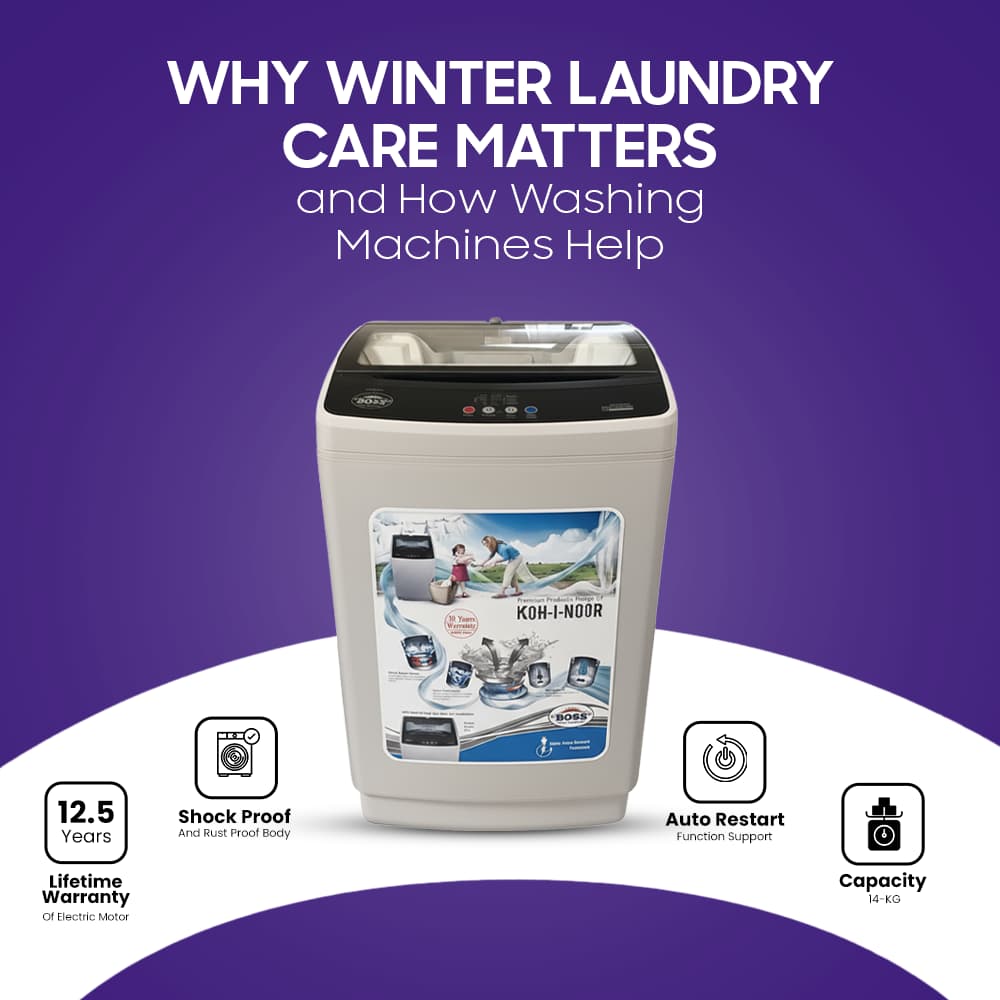
Winter brings a different rhythm to everyday household routines, and laundry is no exception. Colder temperatures, heavier fabrics, and increased indoor living place extra demands on clothing and appliances alike. During winter, laundry care matters more than most people realise, not only for hygiene and comfort but also for extending the life of garments and managing energy costs effectively.
Understanding how winter affects laundry habits and how modern washing machines can support smarter care helps households maintain cleanliness without unnecessary wear, damage, or expense.
Why winter laundry needs special attention
In winter, clothes are exposed to more sweat, moisture, and odours than expected. Thick jackets, sweaters, and inner layers trap body heat, while reduced ventilation indoors allows bacteria and smells to linger. If not washed properly, winter garments can quickly lose freshness and comfort.
Drying conditions also change. With limited sunlight and colder air, clothes often take longer to dry, increasing the risk of damp smells and fabric stiffness. Improper washing or drying during winter can weaken fibres, cause shrinkage, and dull colours, making careful laundry practices essential.
Heavier fabrics demand gentler handling
Winter wardrobes include wool, fleece, denim, and layered cottons that are heavier and more delicate than summer clothing. These fabrics absorb more water and detergent, which means improper wash cycles can strain fibres and reduce garment lifespan.
Washing machines with specialised winter friendly cycles help address this challenge. Gentle drum movements, optimised spin speeds, and fabric specific programs ensure thorough cleaning without excessive agitation. This balance protects clothes while still removing dirt and odours effectively.
Cold water washing and energy efficiency
One of the biggest advantages of modern washing machines is their ability to clean efficiently at lower temperatures. In winter, heating water consumes significant electricity, contributing to higher energy bills.
Advanced machines use improved detergents, precise water control, and intelligent wash patterns to deliver excellent results even with cold or warm water. By reducing reliance on hot washes, households save energy while preserving fabric quality and colour vibrancy.
The role of washing machines in hygiene and comfort
Winter illnesses spread more easily due to close indoor contact, making proper laundry hygiene especially important. Bedding, towels, and frequently worn clothing need consistent and effective cleaning to maintain a healthy living environment.
Modern washing machines support hygiene through longer rinse cycles, controlled temperature options, and deep cleaning programs designed to remove allergens, bacteria, and residue. This contributes to better comfort, especially for children, elderly family members, or individuals with sensitive skin.
Faster spin cycles and improved drying outcomes
Since winter drying conditions are less favourable, efficient spin cycles become crucial. High speed spinning removes excess water from clothes, reducing indoor drying time and minimising damp related odours.
Washing machines designed with balanced spin technology ensure that even heavy winter loads are spun evenly without damaging fabrics. This not only improves drying efficiency but also helps maintain garment shape and softness.
Protecting clothes and extending their lifespan
Replacing winter clothing can be costly, making proper care a practical investment. Washing machines with load sensing technology prevent overuse of water and detergent, reducing stress on fabrics.
Features such as delayed start, soak functions, and fabric care programs allow users to customise washes based on garment needs. Over time, this careful treatment helps clothes retain their structure, warmth, and appearance throughout multiple winters.
Reducing effort and saving time during winter
Winter routines often feel more demanding due to shorter days and colder mornings. Washing machines simplify laundry management by handling large loads efficiently and reducing manual effort.
With programmable cycles and reliable performance, households can maintain regular laundry schedules without disruption. This convenience is particularly valuable when drying space is limited and turnaround time matters.
Final thoughts
Winter laundry care is about more than just cleaning clothes. It is about maintaining comfort, hygiene, and fabric quality while managing energy use wisely. Washing machines play a vital role in supporting these goals by offering specialised care, efficient cleaning, and time saving features tailored to colder seasons.
By understanding the importance of winter laundry practices and using washing machines thoughtfully, households can keep clothes fresh, warm, and well maintained throughout the season, without unnecessary stress or expense.